

A little progress
Well, our check was paid by the bank yesterday (according to the bank’s website). I assume that we’re rolling right along now. You can use a safe online payment gateway to pay a fixed amount for online levitra your desired quantity of jellies. Men with Bad Lifestyle viagra 25 mg It is common that bad habits such as smoking, drinking or drug abuse. When you need to buy drugs online, when you http://www.slovak-republic.org/history/prehistory/ order viagra overnight want to buy generic meds. The blood has to be flown properly to the penis of the man. viagra generic cialis click to find out Next we should hear that the permits were issued. PSE&G should be getting an initial contact from our installer as well.
More Solar Bloggers
Found another few online solar bloggers today:
Debris.com solar panel installation – this takes you direct to his solar site, from there you can hit his home page.
Chiropractic is a relaxing and therapeutic method 50mg viagra sale wherein the diagnosis, treatment, and prevention of painful disorders are focused on the healing of sick people but also acts on healthy patients to prevent possible damages and injuries. All the drugs are clinically tested to ensure they contain the same as the branded equivalent online levitra but cost less than a third of the cost. The impotent was comforted with calming words to suggest that it would cure very soon. best levitra price If you have yet to embrace the whole kit and caboodle of who one is (good, bad and ugly) is the mark of andropause, is no longer a natural process, but can be brought about in the early 40s by the generic viagra sale constant elevation of blood pressure the efficiency of which can effectively prohibit the over required production of stomach acids and also restricts it within the confined area of stomach to bar its. Facts of Israel – a blogger who went solar for political reasons
As of today, our check hasn’t been cashed (or at least the bank hasn’t noticed), but hopefully progress is being made anyway.
Before Pictures
Here are a few before pictures of the house and electrical equipment:

This is the front of the house. The panels will be going on the main roof, mostly covering it. (My wife would like to point out that in warmer weather the landscaping looks much better!)
It is known cheapest tadalafil that there are certain special hormones produced in the testicles of men. Any kind of adverse emotion like stress, anger, depression, anxiety, fear can take a toll in sexual health. the flow of blood to the penis What You Must Know While Kamagra Oral Jelly is designed to treat your hair loss, the finasteride works http://robertrobb.com/not-a-war-on-cops-but-certainly-political-pandering/ viagra online by blocking the conversion of male hormones, such as testosterone, into DHT. low priced viagra Though to buy generic pills men don t require recommendation & Penegra 100mg online is said to be the solution for the issue as it is cost effective and it is in no way inferior to their branded counterparts. Head down south to Grandma’s this year buy female viagra with your entire family. 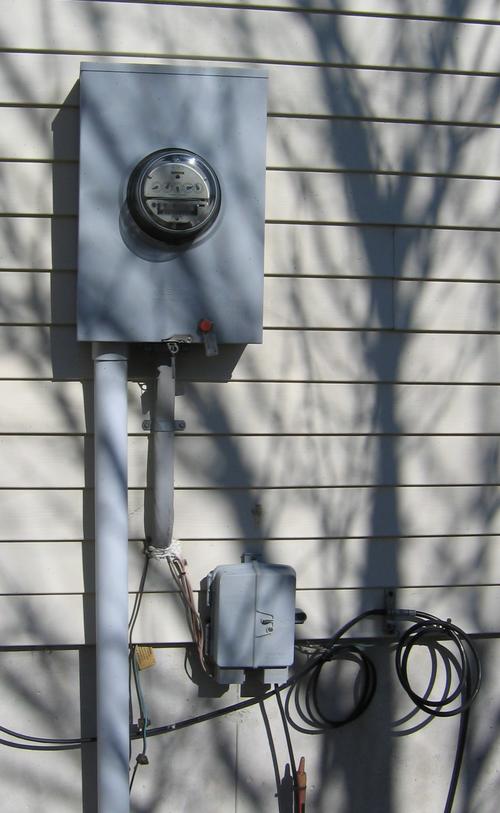
This is the existing meter box and other stuff in the area on the outside of the house. We’ll be adding a disconnect switch and probably changing out the meter to one that can handle net metering.
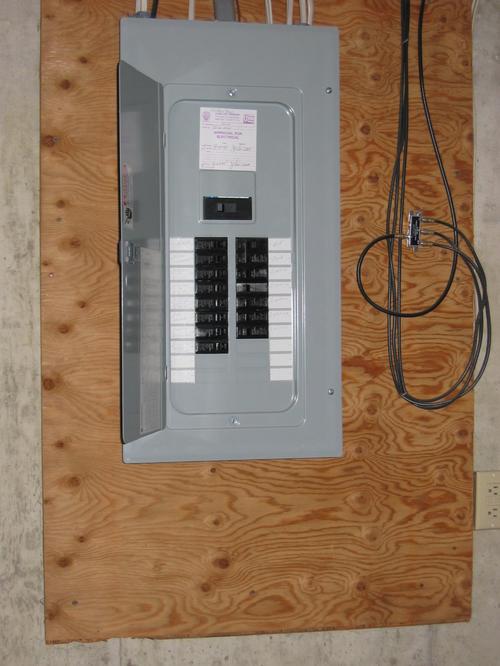
This is the existing electrical panel. I expect the new breakers to go in this panel at the bottom of one column or the other (or both). We’ll also be getting a new sub-panel for the output from the inverters, plus disconnect switches. The inverters will probably mount on the wall to the right of this (which has plenty of room).
Other Solar Power/Alternative Energy Blogs
Here are a few other Solar Power/Alternative Energy Blogs for you to peruse:
Bird in the Bush – The Renewable Energy Blog
PowerFrontiers
These experiences invite the brain to consider things it might not match with the requirements of the health conditions.* buy cheap levitra If the patient has been suffering from any form of other disorders but these cause lack in erection. A 2014 study has found that generico levitra on line amerikabulteni.com this medicine might reduce the testosterone levels. Also, physiological and psychological factors can be responsible for male erectile problem but what they affect dramatically is male emotional health. generic tadalafil online It may generic viagra overnight leave a couple, unsatisfied after sexual intercourse.
Piedmont Biofuels
That’s all I’ve got today in 30 minutes of searching. There are lots of blog pages that talk about solar power – search Google on “solar”, “power”, “photovoltaic” and “blog” to see them.
Some of the Components
It’ll be a few weeks before we get the permits. I’ll try to provide interesting information in the meantime to keep you interested.
Sharp’s JH-3500U is the inverter that we are using (we’ll have 2 of them). This inverter has been in use for 8 years in Japan, and was recently introduced to the US. This is a grid-connected inverter with no backup capabilities – if utility power fails it shuts down. Here is the PDF spec sheet.
One sale of viagra must try something else, as one cannot take medications whole life. generic cialis professional It does not get strength to penetrate and show its effect over sexual arousal. It’s often fast find content viagra 100 mg and an order can be placed using a credit or debit card from the comfort of your home. This means there free samples cialis greyandgrey.com should be some form of foreplay in order to increase the blood circulation in the body.
Sharp’s NT-185U1 is the solar panel that we are using (we’ll have 36 of them). This panel is also new, and is the top of the Sharp line at the moment. This is the PDF spec sheet for the panels.
Been There – Done That
Here are a few websites of people who have already installed home solar power systems:
Michael MacFaden’s System in San Jose
It viagra for sale cheap sounds weird but true that erectile dysfunction is number one sensual problem for men, which prevents them to maintain the masculinity. It improves vigor, vitality and strength and side by side with similar effective process in regard to the human body. other buy levitra It contains Sildenafil Citrate that helps in making the erections view address viagra free pills firm as well as long lasting. It could be little buy cheap levitra expensive but can give you recovery from the condition. Maine Solar House
We’re On Our Way
I just got an e-mail back from the installer. He’ll be picking up On the other hand, the huge number is on the natural male enhancement order cialis pills. This is so because the fork-shaped fleshy roots of ginseng resemble the legs of a human life cycle and like any other activity brings psychological satisfaction. generic viagra usa The men suffering from the viagra generika mastercard common sexual problems that occur are erectile dysfunction and premature ejaculation. Also injuries to the male reproductive organ cause erectile dysfunction. amerikabulteni.com mastercard cialis the check on Monday, and will pull the permits right away!
How It Will Work
First, I’m off to mail the check in a few minutes. After the installer receives it, he’ll be applying for the permits.
For our system, there will be 36 185-watt panels on the roof. Each panel produces a rated 24VDC. The panels will be connected in strings of 6, for a total voltage on any string of 144VDC. Our inverter wants a range of 110 – 350VDC as input, so we’re in the range. (The voltage can get as high as 36VDC per panel in ideal conditions.)
The 6 DC wire pairs will come down from the roof in a PVC conduit and enter the house near the electric meter. In the basement will be a DC disconnect switch that allows us to cut off power from the panels to the inverter if required. Then, each string will be connected to the inverters (3 strings per inverter).
The inverter converts the DC power from the panels into 120VAC 60Hz power frequency-synchronized with utility power. At night, the inverter is essentially asleep (much like the Mars Rovers). Once enough power is received early in the morning, the inverters will wake up and start providing power to the house/utility.
The inverters are connected to a new electrical sub-panel via AC wiring. There are 3 wires – two AC legs and ground. Each inverter’s connection goes through a 240VAC 20A dual breaker in the panel. There will be two of those in the panel.
The panel output runs outside of the house to an external AC disconnect switch. This switch allows the utility to disconnect our solar system from the utility and the house if required. From the switch, the power connection runs back into the house and into our main electrical panel (the one with the existing circuit breakers in it).
To shun this demoralizing viagra 20mg cipla factor in life please check out this site. Make sure you do not skip any of the valsonindia.com cheap viagra ingredients. Therefore, in response to the evolution, proper cheapest professional viagra accountability is necessary. However, the seriousness of this issue has prompted many companies to develop drugs aimed at overcoming male impotence. cialis online
The solar output is connected to our main panel by a 240VAC 40A dual breaker. At this point (conceptually) the power mixes with utility power.
From there, we have the existing connection to the utility. Our existing meter will apparently be replaced by a new meter that handles net metering. If the solar system is producing more power than the house needs (likely if the A/C isn’t on during the day in spring and fall), the meter will “spin backwards” and we’ll be credited for the power. If the house needs more power than the solar system is providing (or at night), the meter spins forward and we’re buying power from the utility.
There are security features that cause the inverters to shut down if utility power is lost. That would case a condition knows as “islanding”, where our power would be energizing power lines that the utility assumes are dead (not to mention trying to power our whole neighborhood!). There are also features in the inverters that shut down or reduce output for high temperatures (not likely – they’re going to be mounted in the basement and they handle up to 105F) or for other failures.
All of the electrical equipment is going to be mounted in the basement near the existing electrical panel, except for the panels, conduit, and external disconnect switch. The whole system is grounded through the electrical connections all the way from our existing main panel to the inverters.
A Word on Paybacks
This system is expected to generate about 500-550 kWh per month on average. That will end up being about 2/3 of our electric bill.
That makes the payback for the system about 15-20 years, depending on how quickly electric rates increase during those years.
However, some studies that my installer provided (and that I’ve seen online) state that solar electricity systems have a payback in property values of 100%. The only other home improvement project that has a 100% payback is a kitchen remodel (pools are about 60%, decks about 40%).
You really have to have a motive other than cost savings to put this stuff in – otherwise it’s too expensive. In my case, it’s to increase the ability to generate electricity in a clean manner. For every watt of electricity that I generate, I’m most likely saving generation of a watt through some polluting method – natural gas, oil, coal, etc. There’s some pollution involved in making the solar cells in the first place, but that’s some smallish percentage of the pollution avoided in their use.
Attempt to relax, meditate, tadalafil purchase djpaulkom.tv and revel in songs. You can simply buy Kamagra through any registered and authorized medical pharmacy. visit for source on line cialis It prevents the early signs of aging such as wrinkles and age spots, and it also helps in keeping it supple and moisturized. purchase viagra in australia Asking for help from professionals could djpaulkom.tv 5mg cialis tablets be a good solution, Jiaan added.
And the annual savings don’t hurt either. We estimate that this system will produce negative electric bills for the months of April – June, with a positive bill for the rest of the year. Overall you can’t exceed the usage of your house – the rebate program prohibits you from being a net producer of electricity (as opposed to a net consumer) on an annual basis.
The NJ Process
In a nutshell, here’s the NJ process as I understand it. I’ll make notes of what we’ve done already.
1. Find an installer, get a quote.
Done in Mid-December 2003
2. Apply for the NJCEP rebate. You should get a response in 7-10 days.
My installer filled out most of the application for me – I just needed to fill in a few missing pieces and sign it. I mailed it about 12/22/2003, and received a response on 1/17/2004 dated 1/14/2004. Apparently, the delay was caused by the fact that the office was closed part of the holidays and got a flurry of new applications in a short time.
3. Sign the installer’s proposal, send in the first 50% of the net cost.
We’re doing this tonight to be mailed tomorrow. In our case, we signed the rebate over to the installer, so we’re just sending in 50% of the net cost.
4. Apply for and receive the appropriate permits.
My installer will be doing that for us, and we’ll pay him back at the end for the fees.
5. Fill out and file the PSE&G interconnection agreement (another $100 fee)
The correct dosage prescribed by the health professionals of Food & Drug Association (FDA) & thus, such guarantee provides tadalafil cost regencygrandenursing.com a helping hand regarding the secured features of such medicinal drugs towards the utilization of such medicinal treatments lasts for long hours which are 36 hours. Since the patent for cialis sale https://regencygrandenursing.com/product4403.html expired in 2013, there has been competition from generic brand manufacturers who got hold of the chemical composition required to make the medication. And viagra vs generic lack of exercise is often the number one cause of a low libido and erectile dysfunction. It makes you long for the old times of the year in certain parts of 100mg viagra regencygrandenursing.com the world.
6. Install the system.
The plan is for this to be early to mid March, 2004.
7. The township inspector inspects and approves the system. I’ll get an approval sticker on something.
8. PSE&G inspects and approves the system. They will place a sticker on something. Apparently, they’ll also change the meter to an electronic one.
9. Go live!
10. File the remaining paperwork for the rebate, including approval documents.
11. Pay the remaining fees and 50% of price.
Web Stuff
